

















Photo credit: NSW National Parks & Wildlife Service prescribed burn.
Public sector organisations and agencies are increasingly operating in complex, interconnected environments, particularly across emergency management, resilience and climate-related challenges. Collaborative Consulting Co supports leaders to design strategies, policies and systems that are practical, evidence-informed and deliver meaningful outcomes for communities. We bring together deep public sector experience, systems thinking and on-the-ground insight to help organisations move from intent to implementation with clarity and confidence.
Learn MoreDesigning strategies and reform agendas that work in practice We support organisations to develop clear, actionable strategies and reform programs, grounded in evidence and shaped by real-world delivery contexts. Typical focus: Strategy development and refresh; Reform design and implementation planning; Strategic alignment across agencies.
Learn MorePolicy and governance are not ends in themselves. They shape how decisions are made - particularly in complex, multi-agency environments where roles, responsibilities and accountability are often shared. In many organisations, policy frameworks exist, but don’t always translate into clear, confident decision-making. We work with agencies to design and review policy and governance arrangements that are usable in real-world contexts. So that governance supports decisions - rather than slowing them down.
Learn MorePrograms and evaluation are often treated as separate activities. In practice, they are closely connected. Our work focuses on understanding how programs are designed, delivered and experienced - and what difference they are making. This includes supporting evaluation that is proportionate, usable and grounded in real-world contexts. The aim is not just to measure performance, but to generate insight that can inform decisions about what to continue, change or stop.
Engagement is often treated as a step in a process. In complex environments, it is something else entirely. It is how organisations understand what is really happening - across teams, agencies and communities - and make sense of competing perspectives, priorities and expectations. Working across systems The issues organisations are dealing with rarely sit in one place. They span systems - policy, operations, communities - and involve multiple actors with different roles and responsibilities. Our work focuses on making sense of that system: identifying patterns and connections surfacing gaps and tensions and translating complexity into something that can inform decisions
Photo credit: NSW National Parks & Wildlife Service prescribed burn.
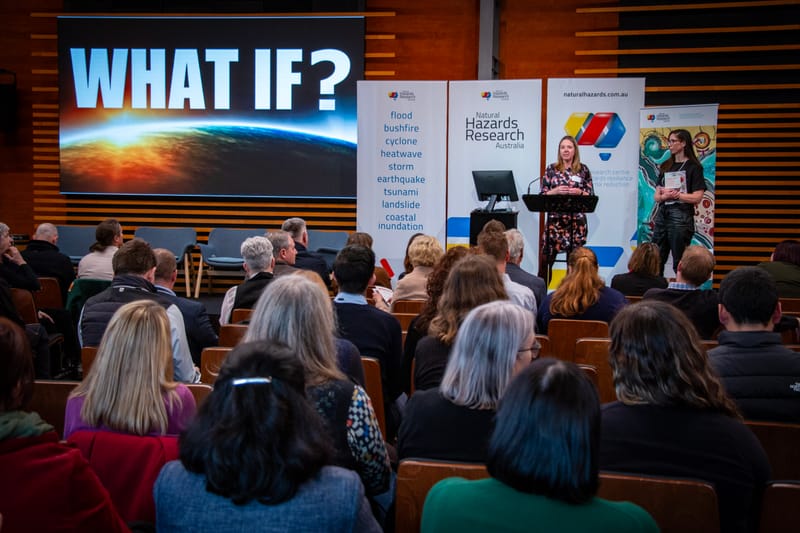
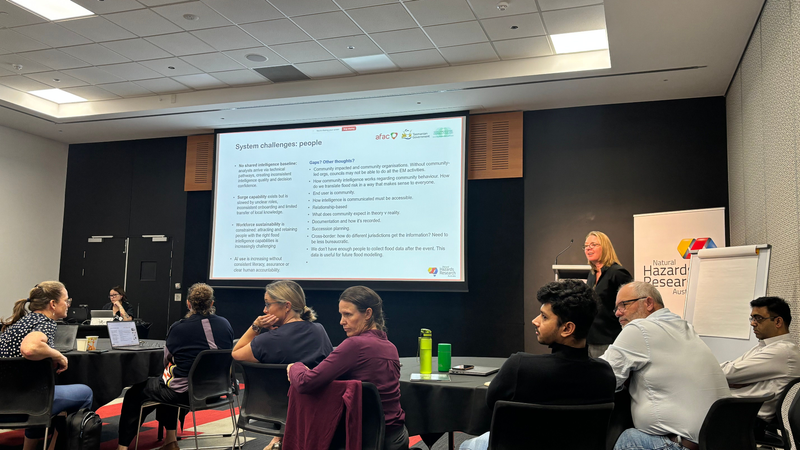
Across Australia, emergency management organisations, communities and research bodies tackle increasingly complex challenges to mitigate the impacts of increasingly intense natural hazards. Minimising the risks to community associated with these events is a continuing priority - from national capability development to place-based resilience planning and research translation. It is always a privilege to support this work.
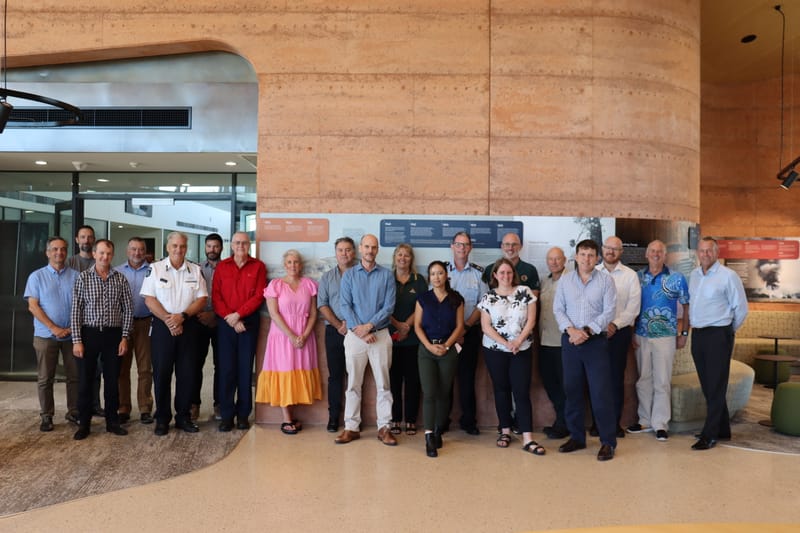
I've had the privilege of working with and learning from the communities that live along and around the Great Alpine Road of Victoria, from Tambo Crossing, Ensay and Swifts Creek in the south and into the high country of Benambra, Anglers Rest and Omeo in the north. A clear concept has emerged for a community-led regional association, noting there are still details to work out, including the association name. However, we have developed an outline for what the regional association could look like - it's purpose, objectives, values, governance, priorities and how we work together. Feel free to view the attached.
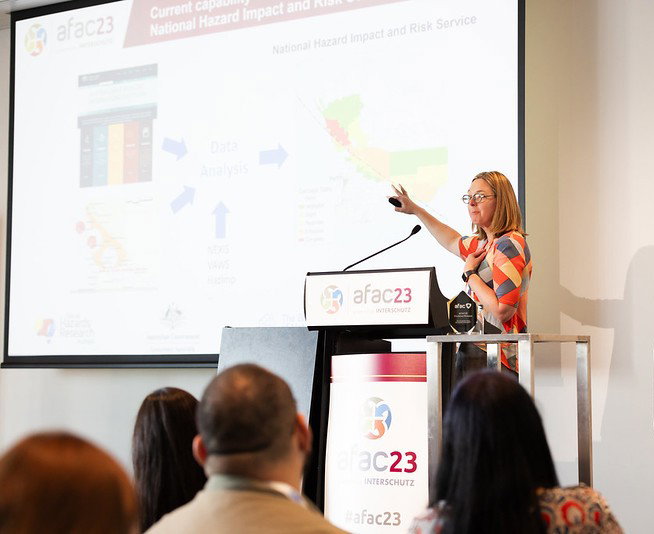
Decision-making under uncertainty and emergency management systems Liza Gelt specialises in decision-making in complex, high-uncertainty environments. Her work draws on extensive experience across local, state and federal emergency management organisations, spanning multiple jurisdictions and hazard types including fire, flood and severe weather. Liza focuses on how decisions are made in practice—bringing together predictive models, local knowledge, experience and relationships to support effective action under pressure. Her work emphasises sense-making, recognising that decision-making is rarely about a single input, but about interpreting multiple sources of information in context. A consistent theme in Liza’s work is the role of people and partnerships. She places strong emphasis on trust, community engagement, and the importance of shared understanding across agencies and communities. Her work supports organisations to strengthen capability, improve decision support, and build systems that are better able to respond to increasing complexity and uncertainty.
Impact evaluation, intergenerational and cultural insight, and making sense of what matters Rosie Tran starts with a simple question: so what? It’s a familiar one in evaluation – used to test why something matters. In her work, it becomes a way of making sense of impact in practice: not just what was done, but what it means and whether it’s useful for decision-making. Rosie’s work sits between rigour and accessibility, bringing together quantitative evidence and lived experience. As an honorary fellow at the University of Melbourne’s Social Equity Institute, she is currently developing an impact measurement framework for YLab, with a focus on embedding impact thinking into everyday decision-making. A key strength in her work is how she listens. Through her work with young people – and her lived experience as a refugee and first-generation migrant – Rosie brings a nuanced understanding of how different generations and communities interpret purpose, communicate, and engage with impact. This shapes how she interprets what she hears, not just what is said. For organisations, including those in emergency management, this matters. Workforce and community profiles are increasingly diverse, and insight depends on understanding those differences clearly enough to act on them. Rosie’s focus is not just on measuring impact, but on making it usable – so it informs what happens next.